The first 30 days of a dedicated rep, week by week
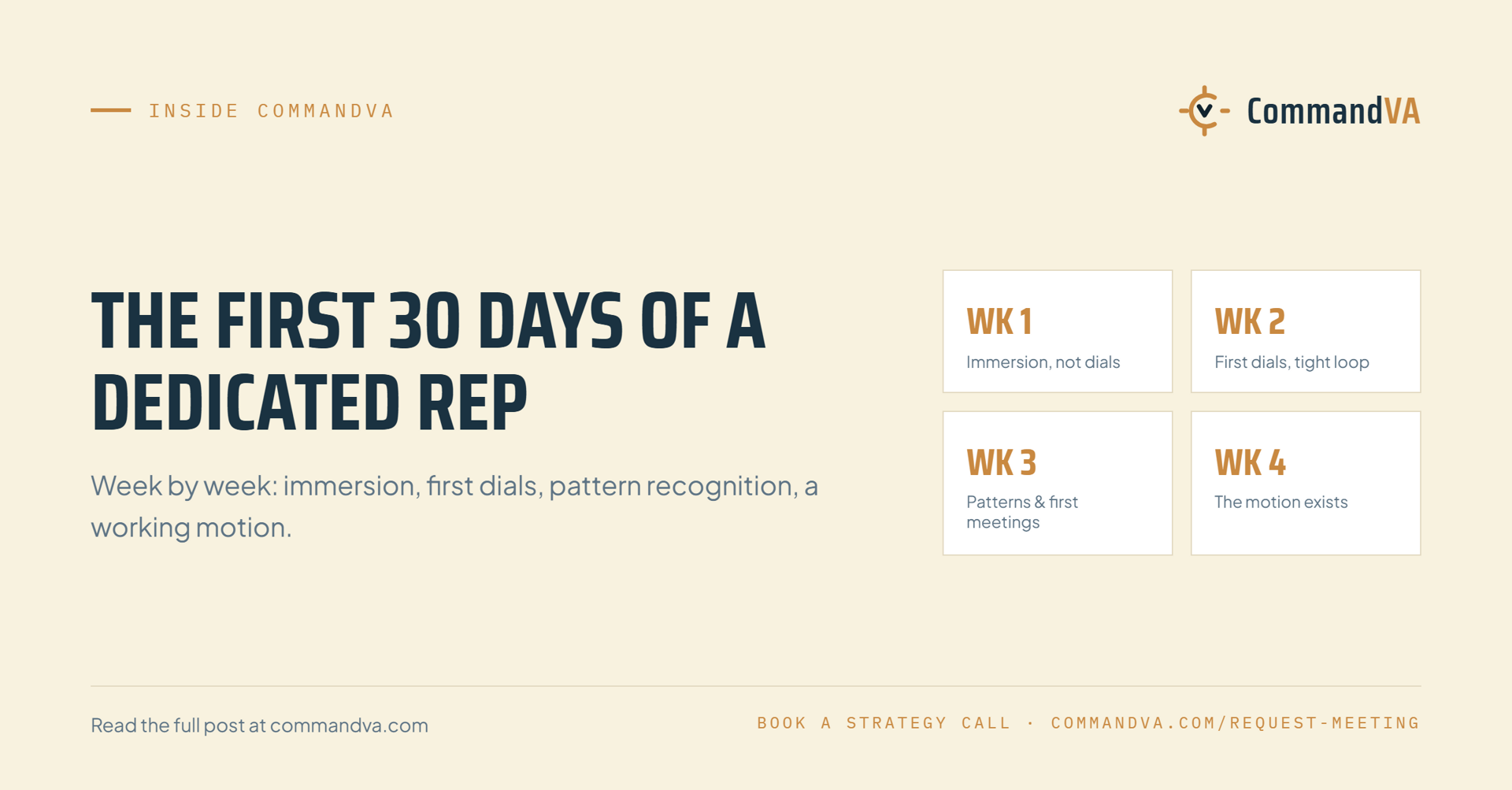
One of the most common questions on strategy calls: "What actually happens in the first month?" Fair question. You are paying from day one, and the industry has trained buyers to expect a long, vague ramp. Here is the honest week-by-week.
Week 1: Immersion, not dials
Your rep learns your business before representing it. ICP definition, product walkthrough, objection mapping, win-story review. We build the target list against agreed signals and write the first call track together. You approve the message before anyone hears it.
Week 2: First dials, tight loop
Calling begins against the highest-confidence segment of the list. Every conversation is logged with verbatim objections. We hold a mid-week and end-of-week review. The message usually shifts twice in this week alone, and it should.
Week 3: Pattern recognition
By now there is enough conversation data to see patterns. Which titles engage, which opener variant holds, which objection is really a targeting problem. Email and LinkedIn touches come online in support of the calling (see why we sequence it that way). First meetings typically land here.
Week 4: The motion exists
A working list, a tested message, a rep who can handle your top five objections without notes, and a weekly report with real numbers in it. Not a mature motion, which takes a quarter, but a real one, improving on a visible slope.
Compare that to the in-house alternative. At day 30, an internal hire is often still in onboarding, and full productivity typically takes three to six months. We wrote about what hiring your own SDR really involves if you want the full picture.
If you want a motion that looks like week 4 instead of a job posting, let's talk.
One dedicated, full-time SDR inside a complete outbound system. Written meeting SLA, weekly reporting, month-to-month. A 30-minute call tells you if it fits.
Book a strategy call