Why discounts backfire in outbound
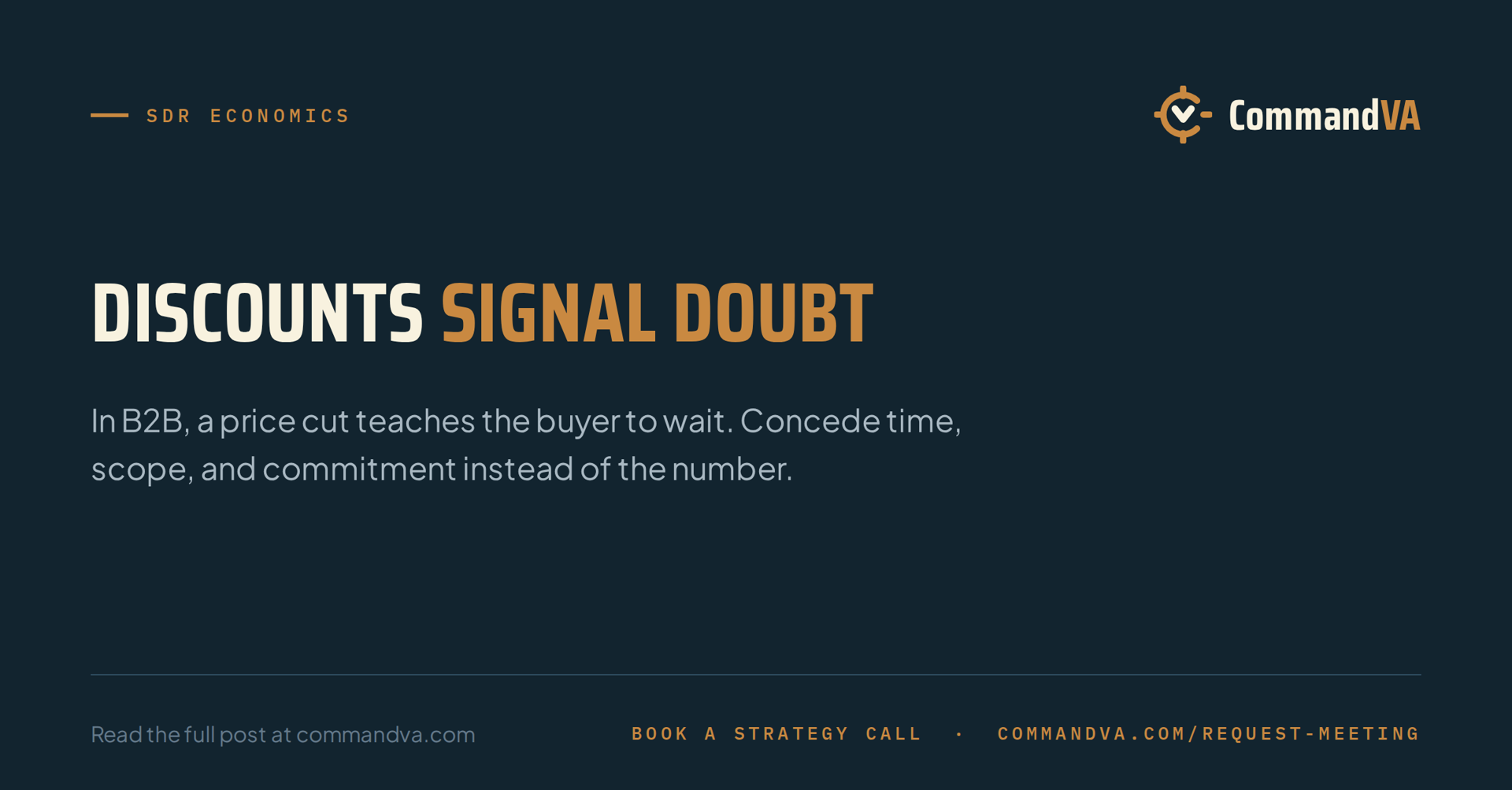
This week the consumer economy is one giant markdown. Forty percent off, doorbusters, countdown timers. Some of that energy always leaks into B2B, and it finds a rep staring at a hesitant Q4 buyer with one lever in reach: knock something off the price. It is the most natural move of the season, and it is usually the wrong one.
Price is information
A discount in consumer retail moves inventory. A discount in B2B moves beliefs. Offer 20 percent off unprompted and the buyer learns several things at once, none of them helpful. The price was padded, which invites a hunt for the real floor. The seller is nervous about the quarter, which invites waiting, since nervous sellers get more generous as deadlines approach. And the product's value is negotiable, which is a strange lesson to teach someone you are simultaneously telling that the product pays for itself.
Procurement teams know the December pattern better than sales teams do. A buyer who senses a quarter-end discount culture learns to stall on purpose, and the concession meant to speed the deal up becomes the reason it slows down. The behavior is rational on their side. It is the seller who built the incentive.
Concede structure, not price
A hesitant December buyer is usually not objecting to the number. They are objecting to the risk of deciding in a noisy month, with a distracted team, right before a budget reset. The concessions that address that risk cost less than a discount and signal confidence instead of doubt:
- Time. Sign now, start in January. The buyer gets the calm start they actually wanted, the seller gets the commitment, and nobody repriced anything.
- Scope. Open with one seat, one segment, one region. A smaller first bite lowers the decision's weight without lowering its price per unit, and it leaves a natural expansion path instead of a discounted anchor.
- Commitment. Shorter terms and clean exits reduce buyer risk more honestly than any percentage. This is why we run month to month all year: the structure absorbs the doubt so the price does not have to.
Each of these gives the buyer what the discount pretended to give, a safer decision, while leaving the price standing as a fixed fact about what the work is worth.
The published-price spine
The deeper defense is structural. A price that lives in a quote can wobble, and buyers can feel the wobble through the phone. A price that lives on a public page cannot. Ours is $3,499 a month, published, and it is the same number in Black Friday week as in July, for the reasons we laid out in why we publish our pricing. When a buyer probes it, and they do, the probe is really a test of confidence, the same test behind "send me pricing". Holding the number, pleasantly and without flinching, is how the test gets passed.
There is also a fairness argument that buyers respect when they hear it said plainly: a discount for the client who pushed hard in December is a surcharge on the client who signed politely in October. Companies keep the prices they can defend out loud.
If your Q4 deals keep stalling at the pricing conversation, the fix is usually structure, not a smaller number. Book a strategy call and bring the deal that is stuck. We will help you find the concession that closes it without teaching your market to wait for December.
One dedicated, full-time SDR inside a complete outbound system. Written meeting SLA, weekly reporting, month-to-month. A 30-minute call tells you if it fits.
Book a strategy call