The first thirty seconds: openers that earn a conversation
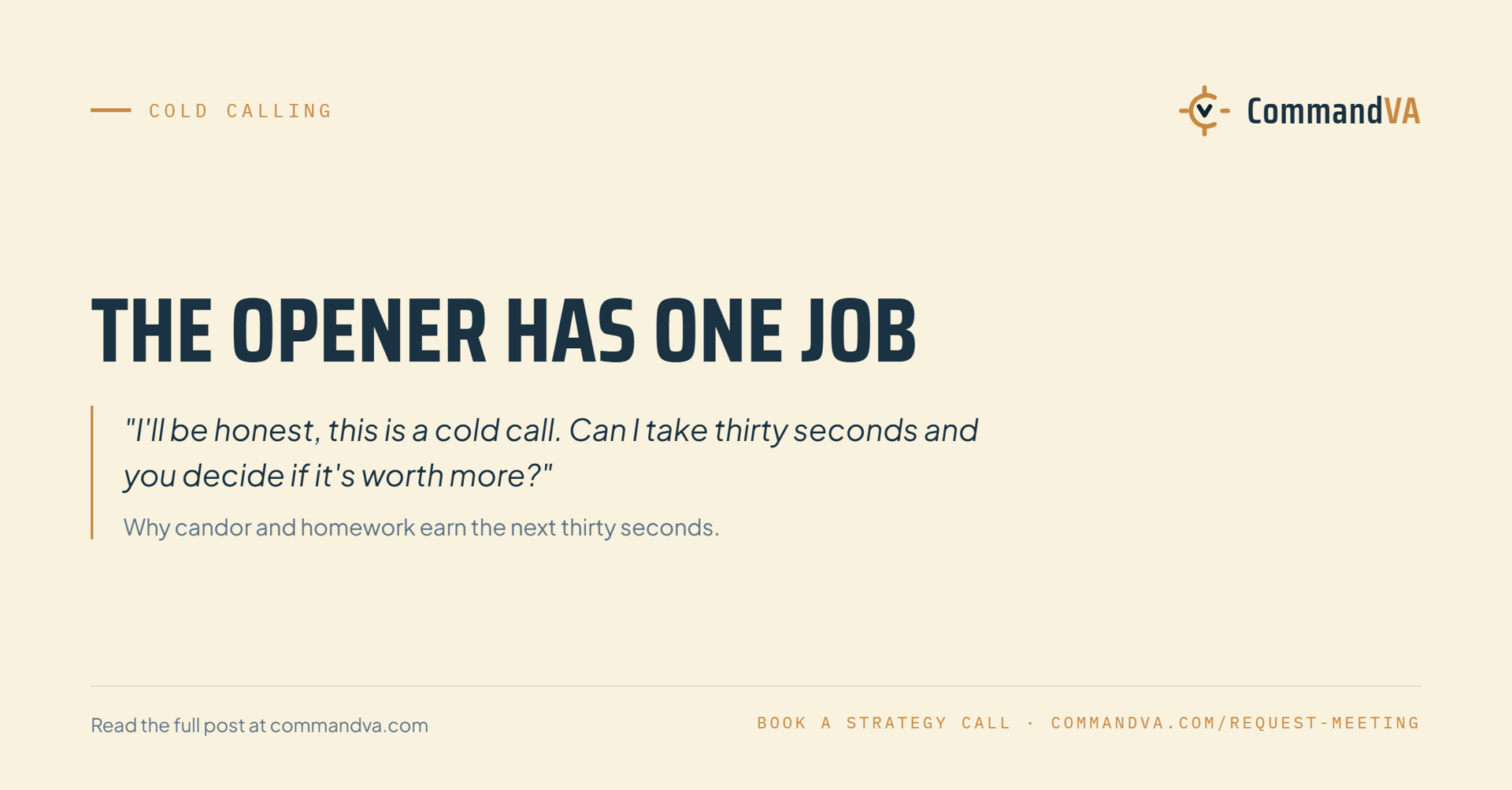
A cold call is rarely won in the first thirty seconds, but it is very easily lost there. The opener has one job: earn the next thirty seconds. Not the meeting, and not the pitch. Just permission to keep talking.
What the good openers have in common
They admit what the call is. "I'll be honest, this is a cold call. Can I take thirty seconds and you decide if it's worth more?" Buyers respond to candor because everyone else is pretending. Permission-based openers hold up in connect-rate data across sales training research for a simple reason. They hand the prospect control, which lowers the reflex to hang up.
They prove homework in one sentence. Relevance beats flattery. "I saw you're hiring two field techs in Dallas" works better than "I love what you're doing at Acme" every time. This is where signal-based targeting pays off on the phone, because the signal that put the prospect on the list is the opener.
They get to a reason fast. One sentence on why you, why them, why now. If the reason takes a paragraph, fix the list before the script.
What kills a call immediately
- "How are you today?" from a stranger. It signals a script before you have said anything else.
- Pretending the call is a follow-up when it is not. Trust is the product. Do not spend it in the first sentence.
- Pitching features before establishing relevance. The prospect cannot care about your product until they believe you understand their problem.
We wrote earlier this year about why cold calling still works when it is done well. The opener is where "done well" starts. It is a trained skill, and our reps drill openers against your ICP before they ever dial on your behalf.
Want to hear what an opener would sound like for your market? Book a 30-minute strategy call and we will draft one live.
One dedicated, full-time SDR inside a complete outbound system. Written meeting SLA, weekly reporting, month-to-month. A 30-minute call tells you if it fits.
Book a strategy call